Measurement Terms
Roundness



Measurement Terms
Roundness
What is Roundness?
Roundness is defined as follows.

Figure 1 Figure 2
Applications Where Roundness Evaluation Is Essential
Factors Contributing to Poor Roundness
Evaluation Methods
①Diameter Method
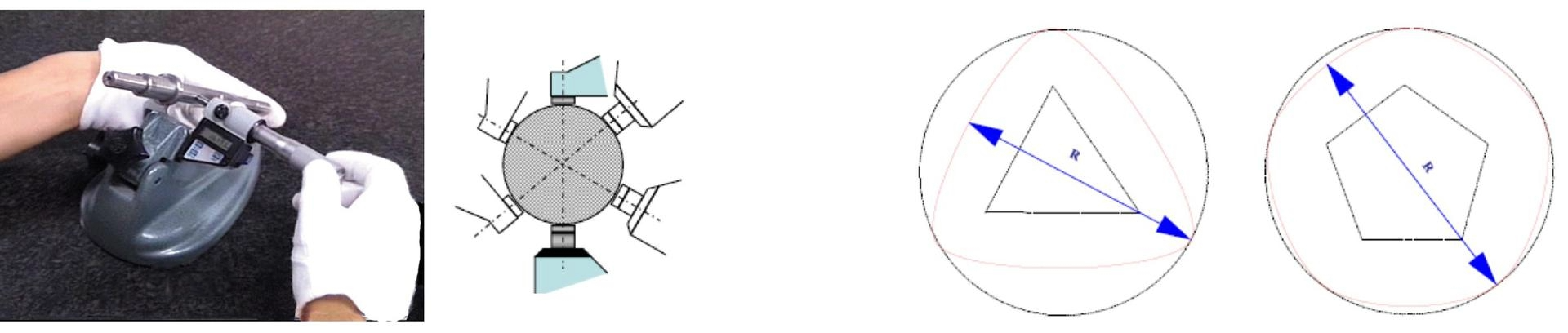
Figure 3 Figure 4
②Three-Point Method
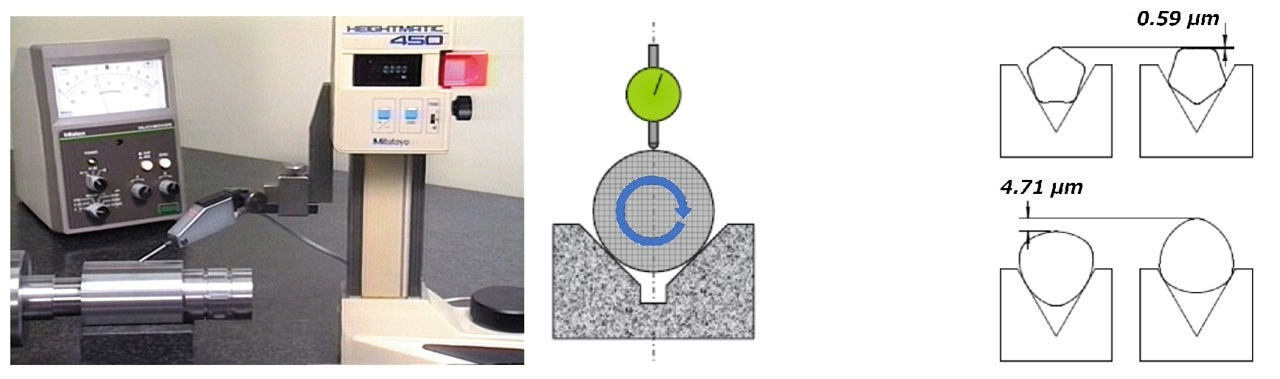
Figure 5 Figure 6
③Radius Method
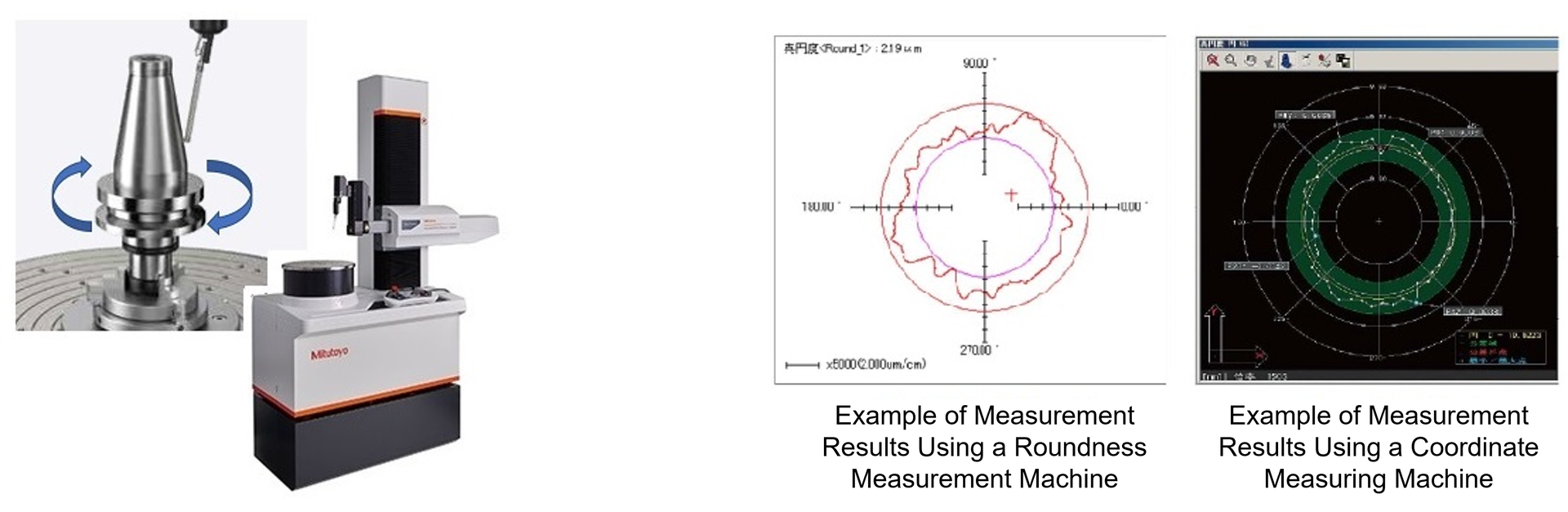
Figure 7 Figure 8
Need help solving a measurement problem? Contact us anytime!
Related Solutions and Applications
RA-2200 Series - Roundness Measuring System
The RA-2200, our best-selling roundness measuring machine, offers exceptional performance and reliability with powerful centering and leveling support functions for precise and efficient setup.
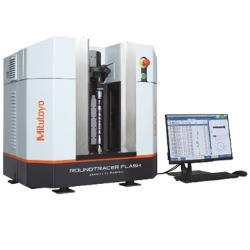
ROUNDTRACER FLASH - Non-contact cylindrical shape measuring machine
The ROUNDTRACER FLASH is a high-performance non-contact cylindrical shape measuring system that rapidly captures complete workpiece data with multiple image sensors and a rotating table, enabling precise measurement of dimensions, steps, and geometric tolerances in a single unit.
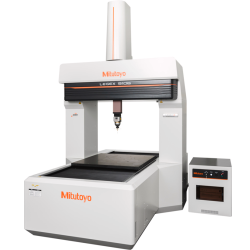
LEGEX Series - Ultra-High Accuracy CNC Coordinate Measuring Machine
The LEGEX delivers world-class ultra-high measurement accuracy (E0, MPE=0.28+L/1000), achieved by meticulously eliminating and controlling error factors.

Mitutoyo America Corporation. All rights reserved.