Solution Proposal from Mitutoyo
Measuring Instrument Overview

|
|
|
What is a Hardness Tester? |
|
|
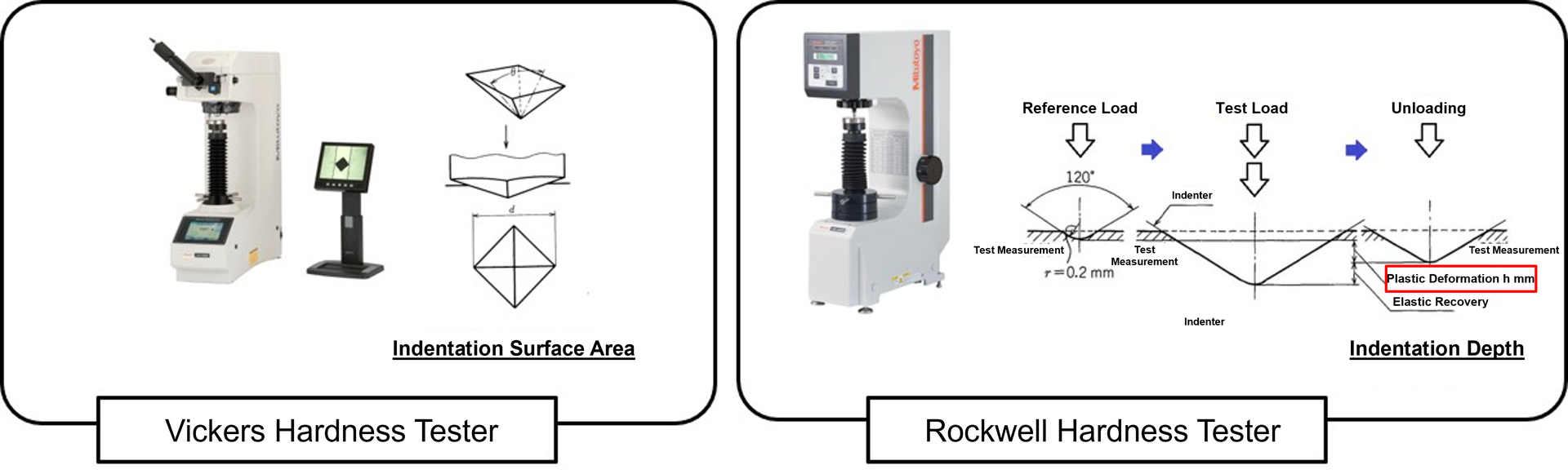
- What is a hardness test? An indenter is pressed into the surface of a sample, and the size of the indentation is converted into a hardness value.
Small indentation = Hard Large indentation = Soft
Evaluates not only the hardness of metal surfaces after heat treatment but also the hardness of rubber and resin materials.
|
- The indentation obtained depends on the shape of the indenter and how the test force is applied.
These indentations are specified in detail in the hardness test standards.
|
-
The Vickers hardness test and Rockwell hardness test are two of the most commonly used hardness testing methods.
|
- A portable rebound hardness tester is also available for convenient on-site use.
|
|
|
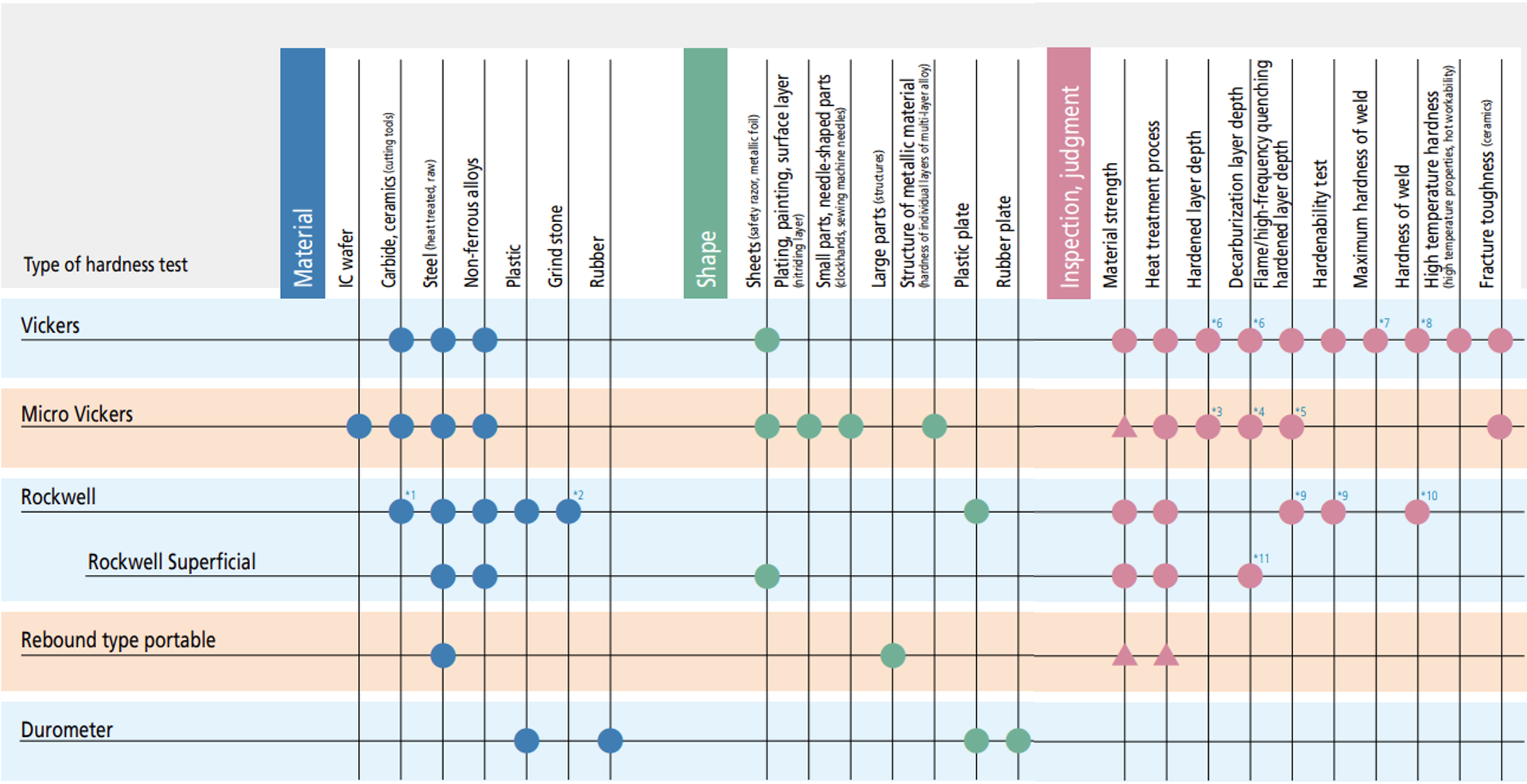
Items Measurable with a Hardness Tester |
|
|
Key Point: It is important to match test conditions when evaluating hardness. |
|
|
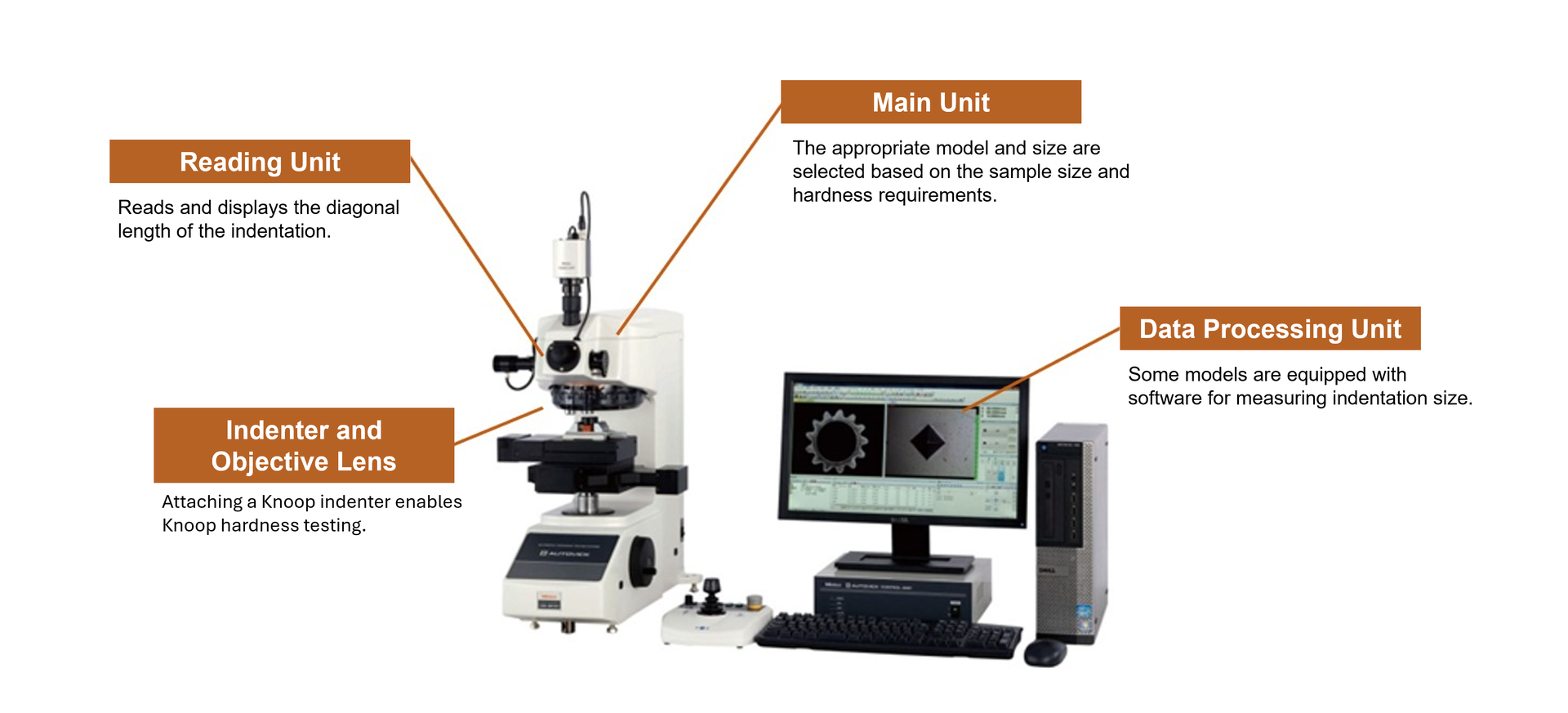
System Configuration: Vickers Hardness Tester
|
|
|
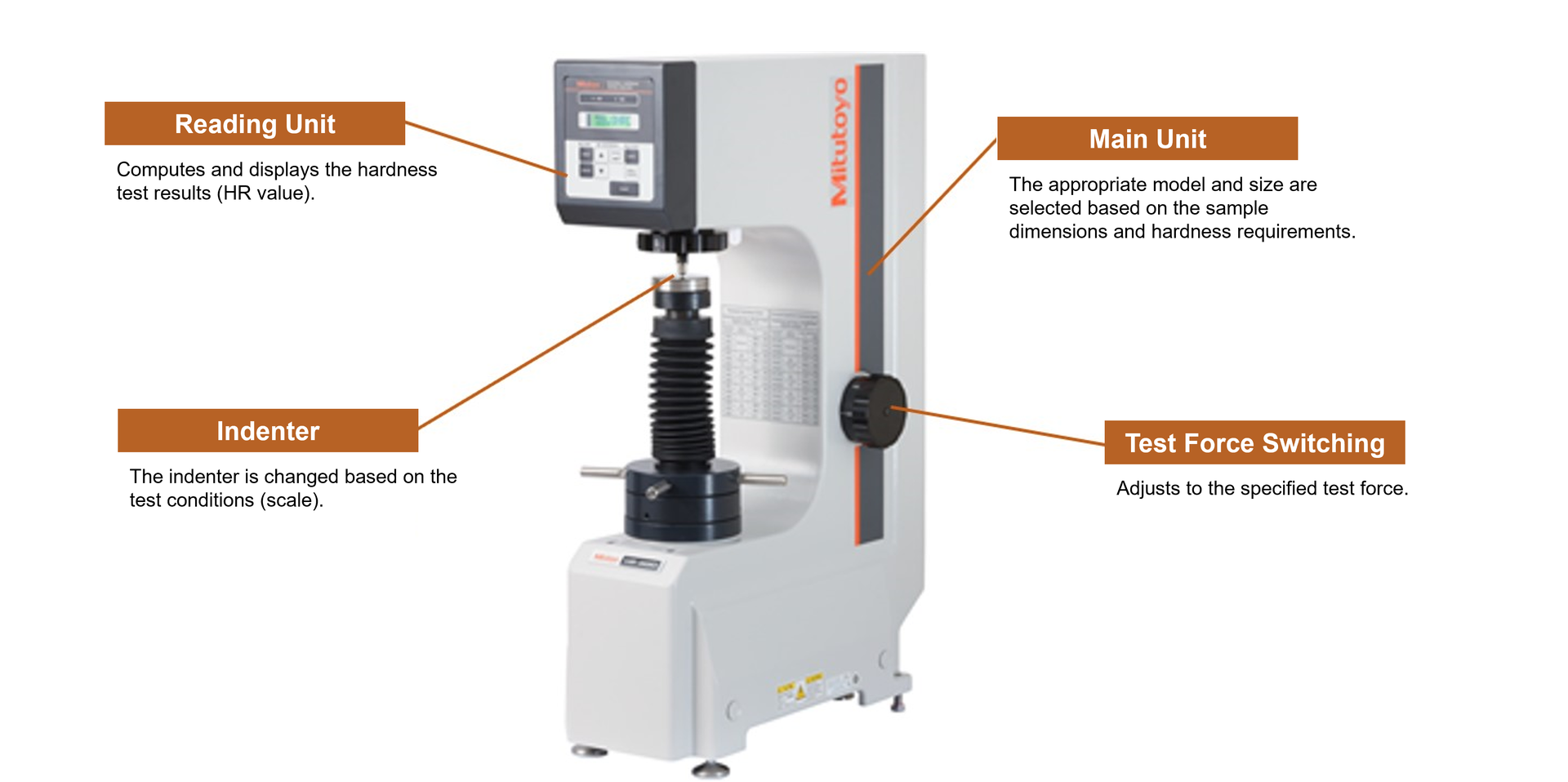
System Configuration: Rockwell Hardness Tester |
|
|
Benefits of Implementation |
|
|
- Exclusive testing of mechanical properties
・Provides the most suitable evaluation method for processes such as heat treatment, plating, and coating.
・No other evaluation methods are as effective for assessing material surface properties.
|
- Reduced testing time
・Support functions simplify machine operation, reducing the workload. ・Automated features, such as indentation reading and multi-site testing, improve efficiency (available in automatic testing models).
|
-
Enhanced reliability
・Eliminates human error in quality control processes. ・Standardized measurement rules ensure consistency of data across suppliers.
|
- Improved corporate image
・Facilitates the development of an advanced quality control system. ・Reduces defect rates, enhancing external trust and reputation.
|
|
|
Key Considerations When Selecting a Model
|
|
|
-
Test method, specifications, and expected hardness
・Choose from Rockwell (Standard & Superficial), Vickers, Brinell, Shore, and other hardness testing methods. ・Determine whether a fixed or adjustable test force setting is required.
|
- Sample size, mass, and shape
・Consider stage size and maximum load capacity. ・Decide between a benchtop model or a portable type based on application needs.
|
- Testing frequency and number of test locations
・Options include manual testing, automated multi-point testing with an electric stage, or fully integrated in-line testing systems.
|
|
|
Need help solving a measurement problem? Contact us anytime! |
|
|
Related Solutions and Applications |
|
|
HM-200 Series - Micro Vickers Hardness Testing Machine |
The HM-200 offers adjustable test force for accurate measurement of hardened layers, with models featuring automated indentation reading and multi-point measurement capabilities to improve efficiency and precision. |
| HV-100 Series - Vickers Hardness Testing Machine |
The HV-100 is a versatile hardness testing machine that supports Vickers, Knoop, fracture toughness, and Brinell tests, with models offering automated indentation reading and multi-point measurement for enhanced efficiency. |
| HR-600 Series - High-End CNC Rockwell Hardness Testing Machine |
The HR-600 is a versatile hardness testing machine that accommodates large workpieces up to 220 lbs without modification and supports multiple testing methods, including Rockwell, Brinell, and Plastics. |

|
|
| © 2025 Mitutoyo America Corporation. All rights reserved.

Privacy Policy |
| |
|
| |
© 2025 Mitutoyo America Corporation. All rights reserved. |
|
|
|